Why Hard Water Is Silently Damaging Drains in Melbourne, FL
Understanding how Florida hard water and mineral buildup affects drain performance starts with one simple fact: most Melbourne homeowners have no idea the damage is happening until it's already serious.
Florida's groundwater passes through ancient limestone formations underground, picking up calcium and magnesium along the way. By the time that water reaches your faucets, pipes, and drains, it carries a heavy mineral load. Over time, those minerals don't just pass through — they stick. They coat the inside of pipes, slowly narrowing the space water has to flow, and combine with soap and debris to form dense, stubborn blockages.
Here's a quick look at how hard water affects your drains:
- Reduced flow rate — mineral scale builds up on pipe walls, shrinking the interior diameter and slowing drainage
- More frequent clogs — minerals mix with soap scum, hair, and grease to create thicker, harder-to-clear blockages
- Higher water pressure on joints — narrowed pipes force water to push harder through the system, stressing connections
- Corrosion and pipe damage — scale accelerates wear on metal pipes and can cause stress cracks in PVC over time
- Appliance strain — dishwashers, washing machines, and water heaters all work harder and wear out faster
Hard water affects roughly 85% of U.S. homes, and Florida sits at the harder end of that scale. In Melbourne and across Brevard County, the combination of deep limestone aquifers and year-round water use means mineral buildup is a constant, ongoing process — not a one-time event.
The Geological Reality: Why Florida Homes Have Hard Water
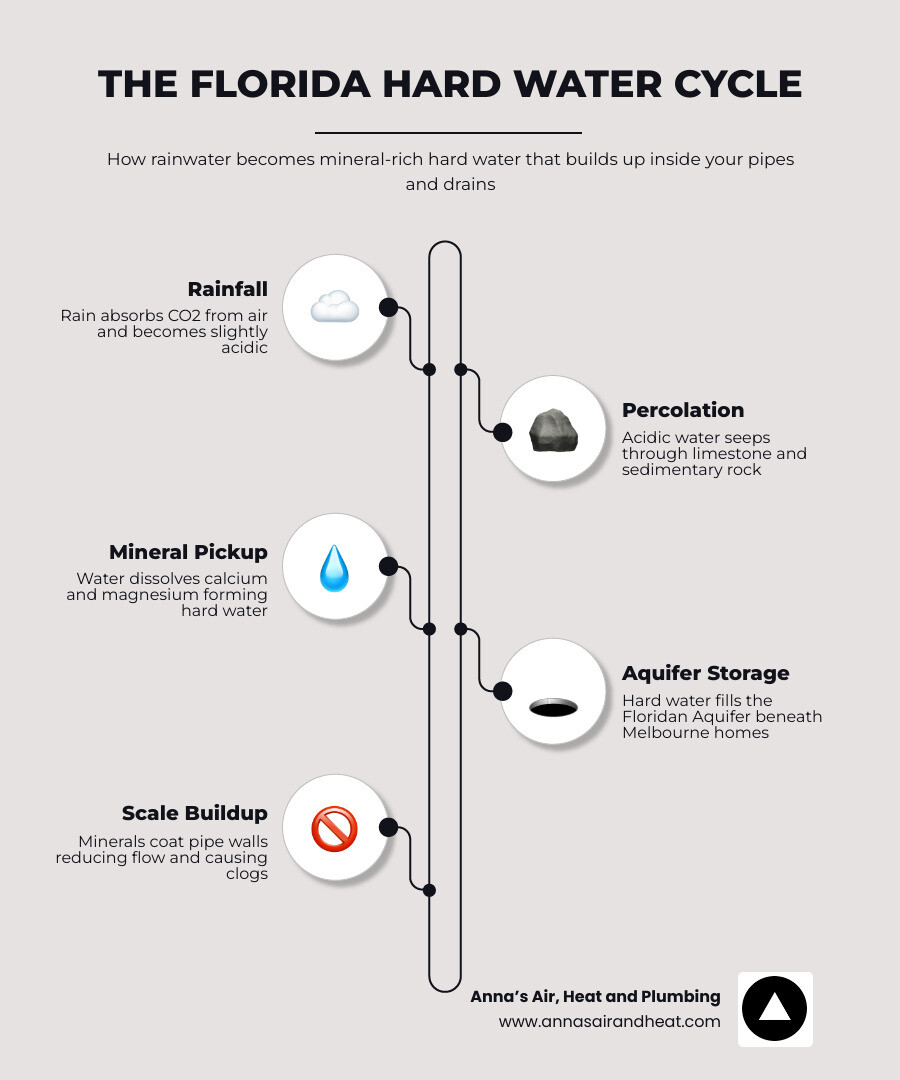
In Melbourne and surrounding areas like Rockledge and Viera, our water doesn't come from thin air; it comes from the ground. Specifically, it comes from the Floridan Aquifer, one of the most productive aquifers in the world. However, this aquifer is essentially a massive underground sponge made of sedimentary rock—specifically limestone and shell.
As rainwater trickles down through the soil to refill this aquifer, it dissolves calcium carbonate and magnesium. By the time we pump it up to use in our homes, the water is "hard," meaning it has a high concentration of these dissolved minerals. While these minerals aren't a health risk to drink, they are a nightmare for your plumbing.
When this mineral-rich water is heated or simply sits in your pipes, the minerals "precipitate" out of the liquid. They turn back into a solid form called limescale. This scale is as hard as rock—because, geologically speaking, it is rock. If you are noticing white spots on your dishes or crusty buildup on your showerhead, your pipes are likely experiencing the same thing internally. If you suspect your home is suffering from these geological side effects, our Plumbing Services can help assess the health of your system.
Regional Variations in the Space Coast
While all of Brevard County deals with hard water, the intensity can vary. In coastal communities like Cocoa Beach and Satellite Beach, the proximity to the ocean and different aquifer depths can change the mineral profile. In newer developments in Viera, the municipal water treatment systems do their best to manage hardness, but the "finished" water can still be quite hard by national standards.
Whether you are on municipal water in Melbourne or a private well in the more rural parts of Palm Bay, the limestone reality remains the same. The depth of the well and the local geological structure mean that some neighborhoods might see scale buildup much faster than others.
How Florida hard water and mineral buildup affects drain performance
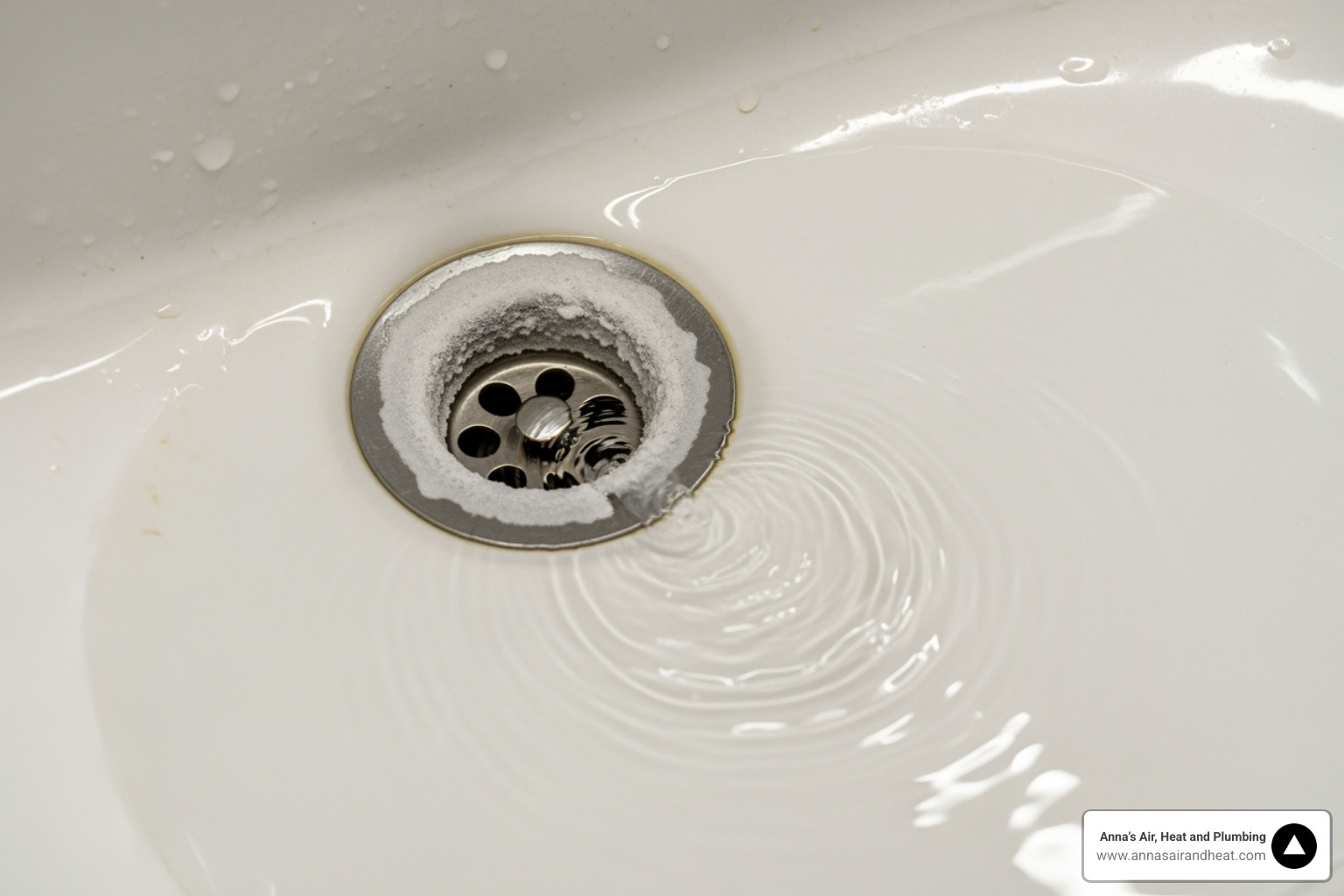
When we talk about how Florida hard water and mineral buildup affects drain performance, we are really talking about the physics of your plumbing. Your drains are designed to work using gravity and smooth surfaces. When minerals enter the equation, they ruin both.
Mineral scale doesn't deposit itself in a smooth, even layer. It creates a jagged, sandpaper-like surface inside your pipes. This creates friction. Instead of water and waste sliding effortlessly toward the sewer line, they get caught on these mineral deposits. This creates turbulence, which slows down the flow of water. Over time, this "slow drain" isn't just an annoyance; it's a sign that your pipe's capacity has been physically reduced. If your sinks are taking longer and longer to empty, it might be time for our professional Drain Cleaning Services to clear the way.
The Narrowing Effect: How Florida hard water and mineral buildup affects drain performance in main lines
Think of your main sewer line like a major highway. When it's clear, traffic moves fast. But mineral scale acts like permanent road construction, closing off lanes. As the layer of limescale grows thicker, the interior diameter of the pipe shrinks.
A standard 4-inch drain pipe can easily be reduced to a 2-inch opening over several years of untreated hard water use. This narrowing increases the internal pressure within the pipe and makes it much easier for a small amount of debris—like a clump of hair or a bit of food waste—to cause a total blockage. When the "highway" is narrowed, it doesn't take much to cause a total traffic jam. For significant blockages or narrowed lines, Pipe Repair Services may be necessary to restore full function.
The Soap Scum Trap: How Florida hard water and mineral buildup affects drain performance in bathrooms
In the bathroom, hard water has a nasty partner in crime: soap. There is a specific chemical reaction that occurs when the calcium in our Florida water meets the fatty acids in traditional bar soaps. This reaction creates "soap scum," a sticky, insoluble curd that doesn't just rinse away.
This soap scum acts like glue. It coats the mineral scale inside your shower and sink drains, and then it starts catching everything else. Hair, skin cells, and lint all get stuck in this sticky trap. Unlike a normal clog that might be loose and easy to move, a "hard water clog" is often a dense, cement-like mixture of minerals, soap scum, and hair. This is why bathroom drains in Indialantic and Melbourne Beach often require more frequent attention. Our Bathroom Plumbing Services are specifically tailored to handle these "sticky" situations.
Visible Warning Signs of Mineral Damage in Your Plumbing
You don't need X-ray vision to know if hard water is attacking your drains. The signs are usually staring you in the face. The most obvious indicator is "calcium bloom"—that white, chalky, or crusty buildup that forms around the base of your faucets or on your showerhead. If it's on the outside, it's definitely on the inside.
Other warning signs include:
- Gurgling sounds: This happens when air is trapped by mineral deposits, indicating that the pipe is narrowed.
- Cloudy glassware: If your dishwasher can't get your glasses clear, the minerals are likely clogging the spray arms and the drain line.
- Stiff laundry: Clothes that feel scratchy or look dull are a sign that minerals are trapped in the fabric and the washing machine's drainage system is struggling.
If you're seeing these signs in your cooking area, it's a good idea to have your Kitchen Plumbing inspected to ensure your dishwasher and sink drains aren't reaching a breaking point.
Identifying Scale in Appliances
Your appliances are often the "canary in the coal mine" for hard water issues. Dishwashers and washing machines use a series of small valves and spray arms to function. Mineral scale can easily clog these tiny openings.
In a dishwasher, scale buildup on the heating element makes it less efficient, while buildup in the drain pump can cause water to pool at the bottom of the machine. In washing machines, the inlet valves can become so encrusted with minerals that they no longer close properly, leading to slow leaks or overflows. This isn't just a plumbing issue; it's an efficiency issue that can impact your home's overall performance in 2026.
The Long-Term Impact on Your Pipes and Household Appliances
Ignoring hard water is a recipe for significant repairs down the road. The long-term effects aren't just about clogs; they are about the structural integrity of your home's plumbing.
| Feature | Hard Water Impact | Soft Water Impact |
|---|---|---|
| Pipe Lifespan | 15-20 years (due to scale/corrosion) | 35-50+ years |
| Water Heater Efficiency | Drops 20-30% as scale builds | Maintains peak efficiency |
| Appliance Lifespan | Shortened by 30-50% | Full manufacturer lifespan |
| Drain Performance | Frequent clogs and slow flow | Consistent, high-speed flow |
While PVC pipes (common in many Merritt Island and Viera homes) don't "rust" like old galvanized steel, the mineral scale can still cause issues. Scale buildup can create "hot spots" of pressure that lead to stress cracks. In older homes with metal pipes, the minerals can actually accelerate corrosion, leading to pinhole leaks. To prevent this, many homeowners choose Water Softener Installation Replacement as a proactive shield for their entire home.
Impact on Water Heaters in 2026
As of May 2026, we are seeing more homeowners than ever dealing with premature water heater failure due to Florida's water. In a tank-style heater, minerals settle at the bottom, creating a thick layer of "sediment." This layer acts as an insulator, meaning the heating element has to heat through a layer of rock before it can heat the water.
This leads to:
- Reduced energy efficiency: Your heater stays on longer to reach the desired temperature.
- Tank rumbling: That "popping" or "knocking" sound you hear is actually steam bubbles escaping from beneath the sediment layer.
- Premature failure: The constant overheating of the tank bottom can cause the protective lining to fail, leading to a catastrophic leak.
Effective Solutions to Combat Hard Water in Melbourne
The good news is that you don't have to just "live with" the damage. There are several ways to fight back against mineral buildup. The most effective solution is a whole-home water softener. These systems use a process called "ion exchange" to swap out calcium and magnesium ions for sodium or potassium ions. This literally removes the hardness from the water before it ever enters your drains.
For those looking for even higher water quality, Water Filtration Installation Replacement can work alongside a softener to remove chlorine, sediment, and other contaminants that are common in the Space Coast water supply.
Maintenance Strategies for Homeowners
While a professional system is the best defense, there are things you can do to manage the scale you already have:
- Vinegar Flushes: Periodically pouring a gallon of distilled white vinegar down your drains and letting it sit for 30 minutes can help dissolve minor calcium deposits.
- Aerator Cleaning: Unscrew the small screens on the ends of your faucets and soak them in vinegar to keep the flow strong.
- Routine Descaling: For appliances like coffee makers and dishwashers, use a commercial descaling agent or vinegar as recommended by the manufacturer.
- Professional Inspections: Having us out once a year to check your drain health can catch scale buildup before it becomes a pipe-bursting emergency.
Frequently Asked Questions about Florida Hard Water
Is hard water in Florida safe to drink?
Yes, the hard water in Melbourne and Palm Bay is generally safe to drink. The calcium and magnesium it contains are actually essential minerals for your diet. However, most people find the "mouthfeel" or taste of hard water to be unpleasant, and it can sometimes carry an earthy or metallic odor due to other dissolved solids.
How often should I clean my drains if I have hard water?
If you don't have a water softener, we recommend a professional drain cleaning every 3 to 6 months to prevent mineral scale from hardening into an immovable mass. Routine preventive care is a more proactive approach than waiting for an emergency pipe replacement.
Will a water softener fix existing pipe buildup?
A water softener is primarily a preventive tool. It will stop new scale from forming. While soft water can slowly dissolve existing scale over many years, it isn't a "quick fix" for pipes that are already 50% blocked. In those cases, a professional descaling or hydro-jetting service is needed to restore the pipes first, followed by a softener to keep them that way.
Conclusion
At Anna’s Air, Heat & Plumbing, we’ve seen how Florida hard water and mineral buildup affects drain performance in homes from Cocoa Beach to West Melbourne. As a woman-owned, local business, we take pride in helping our neighbors protect their biggest investment—their homes. Whether you need a 24-hour emergency repair or a long-term solution like a new water softener, we stand behind our work with a 365-day money-back guarantee.
Don't let Florida's "liquid rock" ruin your plumbing system. Schedule your professional drain cleaning and water hardness evaluation today and experience the peace of mind that comes with clear, high-performing drains.


