Immediate Steps: What to Do When Your Heat Pump Breaks During a Heat Wave
Knowing what to do when your heat pump breaks during a heat wave could be the difference between a stressful afternoon and a genuine health emergency. In Melbourne, FL, summer temperatures regularly push past 90°F — and when your heat pump goes down, indoor temperatures can climb fast. A typical heat pump can only cool your home to about 20 degrees below the outside temperature, which means when it stops working on a brutal Florida summer day, your house heats up quicker than most people expect.
The good news? There are clear steps you can take right now to protect your family, stabilize your home, and get your system back on track.
Here's what to do immediately:
Heat pump failures during heatwaves rarely give you much warning. One moment everything is fine, the next you're watching the thermostat tick upward with no relief in sight. Indoor temperatures above 85°F pose real health risks — especially for children, older adults, and anyone with a pre-existing condition. This guide walks you through every step: from safe DIY checks to knowing when you're dealing with a true emergency that needs professional attention fast. When you realize the air coming out of your vents is lukewarm or has stopped altogether, your first instinct might be to panic. After all, April 2026 has already seen some record-breaking humidity in Indialantic and Melbourne. However, the first few minutes after a breakdown are critical for both your safety and the health of your HVAC system. The very first thing you should do is turn the system off at the thermostat. If the unit is struggling, continuing to let it "run" while it's broken can cause collateral damage to the compressor or motor. Once the system is off, take a quick walk through your home. Are there 4 Signs That You Need Heat Pump Repairs in Indialantic, FL that you missed earlier? Look for ice on the copper lines or water pooling around the indoor air handler. Next, assess your household. Hydration is your primary defense against the Florida heat. Ensure everyone is drinking water—avoiding caffeine and sugar, which can dehydrate you faster. If the power is still on in the rest of the house, you know you aren't facing a local grid outage. If the thermostat screen is blank, it might just need a fresh set of batteries. If these quick checks don't lead to an immediate fix, you are likely looking at a Heating Repair (which, in heat pump terms, includes cooling) that requires professional tools. At this stage, it is better to call for help early. During a heatwave, service schedules fill up fast. Before you assume the worst, there are several "low-hanging fruit" issues you can check safely. We always recommend starting with the simplest components. Sometimes, the issue is more technical. For instance, Why Is My Heat Pump Short Cycling in Indialantic, FL? It could be a faulty capacitor. Statistics show that about 80% of AC failures are due to a faulty capacitor—a small component that helps start the motors. While the part itself is inexpensive, replacing it involves handling high-voltage electricity and should be left to the pros. Beyond the basics, heatwaves put unique stress on your system. One common culprit is a refrigerant leak. Heat pumps don't "use up" refrigerant like a car uses gas; if it’s low, there’s a hole in the line. During extreme heat, low refrigerant levels prevent the system from absorbing heat from your home, often leading to frozen evaporator coils—yes, your unit can freeze even when it’s 95°F outside! Another frequent issue is restricted airflow at the outdoor unit. In Satellite Beach or Viera, salt air and garden debris can clog the delicate fins of your condenser. Why Does My Heat Pump Run Constantly in Satellite Beach, FL? Often, it’s because the unit can’t "breathe." Ensure you have at least a 2-foot clearance around the outdoor unit. Trim back any hibiscus or palms that have crept too close. If your system quits at 2 AM, the situation feels much more urgent. First, listen for any 3 Heat Pump Sounds That Should Alarm You in Rockledge, FL, such as screeching, grinding, or loud banging. If you hear these, or if you smell something like burning plastic, turn the power off at the breaker immediately. Don't spend the night tossing and turning in a 90-degree bedroom. If the indoor temperature is still manageable, use "Fan Only" mode to circulate air, but only if the blower motor is still working. If not, focus on safety first. Open windows only if the outside air is cooler than the inside air (which is rare in Florida summers). Otherwise, keep the house sealed tight to trap whatever "cool" is left. Once you've scheduled your repair, the goal shifts from "fixing" to "surviving." In Melbourne and Palm Bay, the humidity can make a 85°F indoor temperature feel like 95°F. You need to create a "Thermal Fortress." You might wonder, Why Is My Heat Pump Blowing Cool Air in Heating Mode? While that's usually a winter concern, the underlying mechanics are the same. If the reversing valve is stuck, your system might be trying to "heat" your home in the middle of July. If you feel warm air coming from the vents, shut the system down immediately to prevent the temperature from rising even faster. Is a broken heat pump always an emergency? In the Florida summer, it often is. We consider it a true emergency when: If your system is older than 10-15 years and begins to fail during every heatwave, it might be time to look at Signs You Need a New Heat Pump in Rockledge, FL. Frequent breakdowns are the system's way of telling you it can no longer handle the Florida load. Regular HVAC Maintenance is the best way to avoid these emergencies, but when they happen, you need a team that responds fast. If your heat pump is blowing warm air, the most common causes are a tripped breaker to the outdoor unit (meaning only the indoor fan is running), a refrigerant leak, or a failed compressor. It could also be a thermostat setting error or a stuck reversing valve. Turn the system off and check the outdoor unit to see if the fan is spinning. No. "Emergency Heat" (or AUX heat) is designed for winter use when the outdoor temperature is too low for the heat pump to extract heat. It activates electric resistance strips that generate heat. Turning this on during a summer heatwave will only make your home hotter and significantly increase your electricity bill. The best prevention is airflow. Change your filters every 1–3 months, keep your vents open (don't close more than 10% of the vents in your home), and ensure the outdoor unit is clean. Learn How to Prevent HVAC Emergencies with Maintenance Before They Happen by scheduling a professional tune-up every spring. At Anna’s Air, Heat and Plumbing, we know that a broken heat pump in the middle of a Melbourne summer isn't just an inconvenience—it’s a crisis. As a woman-owned business, we pride ourselves on being the neighbors you can trust when things get sticky. We serve the entire Space Coast, from the beaches of Indialantic and Cocoa Beach to the growing communities of Viera and Palm Bay. We offer fast, reliable service, including same-day new system installs for when your old unit finally gives up the ghost. Plus, we stand behind our work with a 365-day money-back guarantee. We want you to be comfortable and confident in your home’s climate. Don't spend another minute sweating it out. More info about our Heat Pumps is just a click away, or give us a call to get a technician to your door today. Stay cool, stay hydrated, and let us handle the heavy lifting!
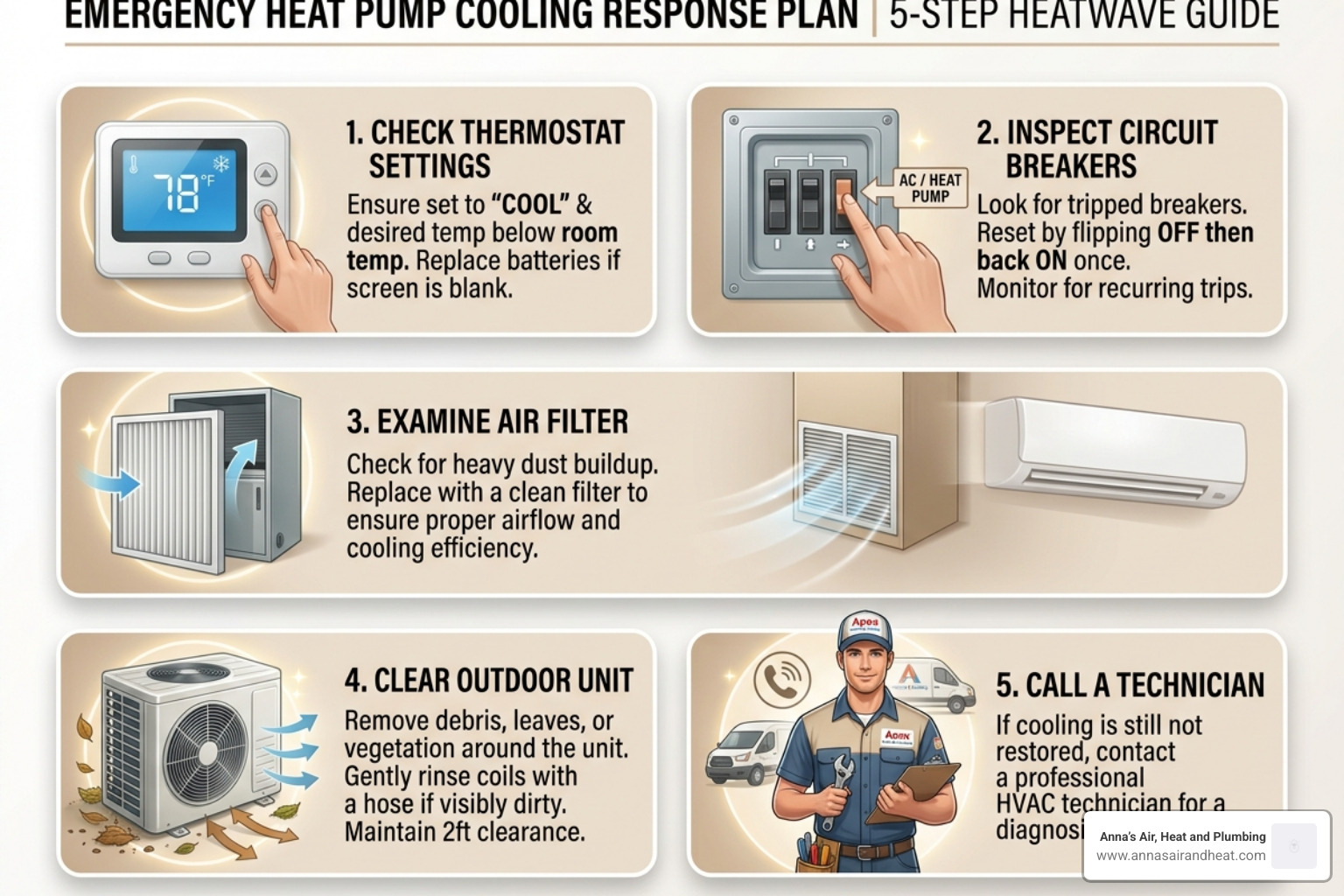
Safe Troubleshooting and Common Causes
Common causes for what to do when your heat pump breaks during a heat wave
DIY Check
Professional Repair
Replace Thermostat Batteries
Replace Faulty Capacitor
Reset Tripped Breaker (Once)
Repair Refrigerant Leaks
Change Clogged Air Filter
Replace Seized Blower Motor
Clear Debris from Outdoor Unit
Fix Reversing Valve Issues
Ensure Vents are Open
Clear Clogged Condensate Drain
What to do when your heat pump breaks during a heat wave at night
Staying Safe and Comfortable While Waiting
Recognizing a True HVAC Emergency
Frequently Asked Questions about Heat Pump Failures
Why is my heat pump blowing warm air during a heat wave?
Should I use "Emergency Heat" mode during a cooling failure?
How can I prevent my heat pump from freezing up in the summer?
Conclusion


