Why Knowing How to Stay Safe When Your Heat Pump Stops Working Could Protect Your Family
How to stay safe when your heat pump stops working is something every Melbourne, FL homeowner should know before an emergency strikes — not during one.
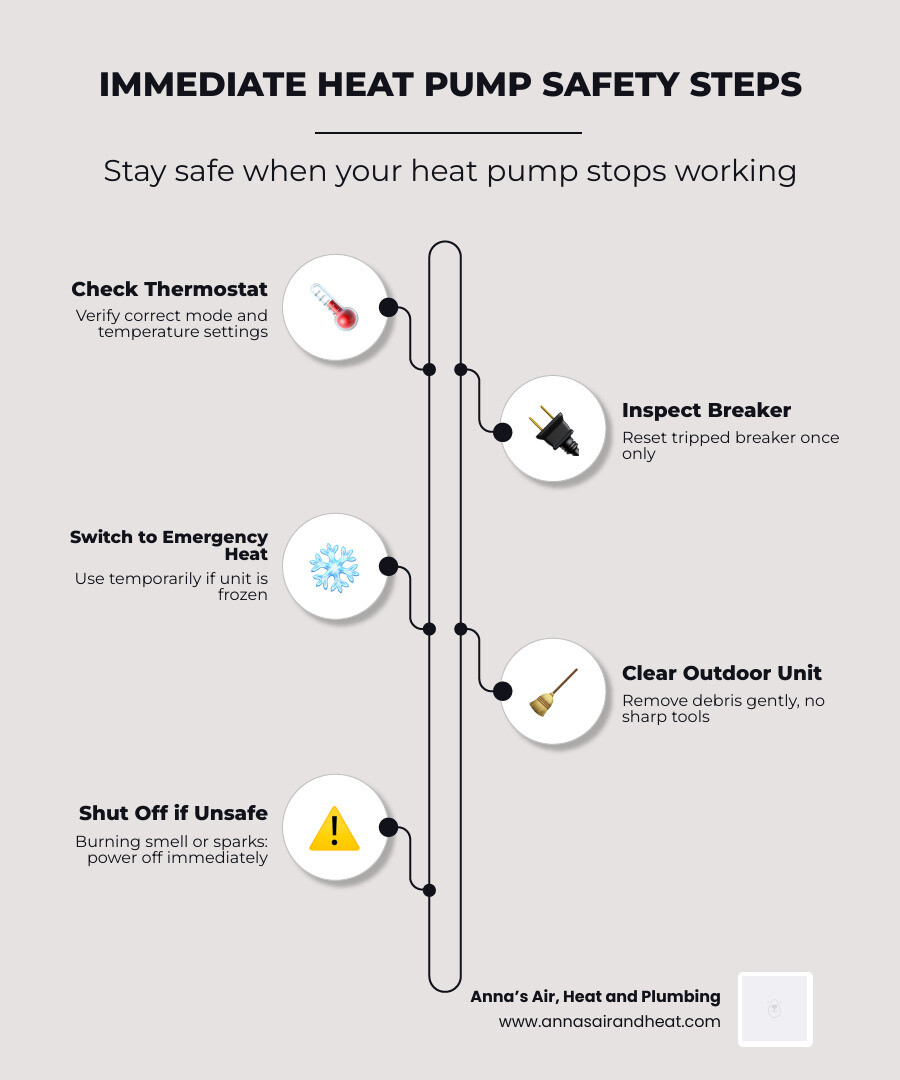
Here are the most important steps to take right away:
- Check your thermostat — make sure it's set to the correct mode and temperature
- Inspect your circuit breaker — reset a tripped breaker once, but don't force it repeatedly
- Switch to Emergency Heat — use it temporarily if your outdoor unit is frozen or making alarming noises
- Clear the outdoor unit — remove debris, snow, or ice buildup (no sharp tools)
- Replace a clogged air filter — a dirty filter can cause or worsen many heat pump failures
- Use a safe space heater — keep it 3 feet from anything flammable and plug it directly into a wall outlet
- Shut the system off immediately — if you smell burning, see sparks, or hear loud grinding, turn it off at the breaker and call a professional
Your heat pump is one of the hardest-working systems in your home. According to energy experts, heating alone accounts for roughly 40% of your electricity bill during cold weather — and a failing system can drive that number even higher while leaving you uncomfortable or unsafe.
When your heat pump suddenly stops working, it's easy to panic. Maybe it's the middle of a rare Melbourne cold snap, or a sweltering summer afternoon when cooling cuts out entirely. Either way, the wrong response can turn a manageable repair into a real safety hazard — or cause expensive damage to your system.
This guide walks you through exactly what to do, what to avoid, and when to call in a professional.
Immediate Warning Signs of a Dangerous Heat Pump Malfunction
Before a heat pump completely dies, it often tries to tell you something is wrong. Recognizing these red flags early can prevent a total system shutdown and, more importantly, keep your home safe from electrical fires or mechanical disasters.
Burning Odors and Electrical Sparks
If you smell something like burning plastic, ozone, or "electrical smoke," treat it as an emergency. This often indicates melting wire insulation or a failing motor. Similarly, if you see sparks coming from either the indoor air handler or the outdoor condenser, do not wait for the system to shut itself off. Turn off the power at the main electrical panel immediately.
Unusual Noises
While heat pumps make a gentle "whoosh" during a defrost cycle, certain sounds are a call for help. Metal-on-metal screeching, loud banging, or persistent 3 Heat Pump Sounds That Should Alarm You in Rockledge, FL usually signal a broken fan blade or a failing compressor. Grinding noises are particularly dangerous as they suggest the "heart" of your system is seizing up.
Short Cycling
Is your system turning on and off every few minutes? This is known as short cycling. It’s not just annoying; it’s a sign that the system is overheating or facing a critical pressure issue. You can learn more about Why Is My Heat Pump Short Cycling in Indialantic, FL? to understand how this behavior stresses every component in your HVAC unit.

How to Stay Safe When Your Heat Pump Stops Working: DIY Troubleshooting
When the air stops moving, the first thing to do is stay calm and perform a few "zero-touch" checks. You don't need to be a mechanic to verify the basics.
Thermostat and Breaker Checks
First, check your thermostat display. Is it blank? It might just need new batteries. Ensure it is actually set to "Heat" or "Cool" and that the temperature setting is at least five degrees above (for heating) or below (for cooling) the current room temperature.
Next, visit your electrical panel. Indoor and outdoor units are usually on separate breakers. If one has tripped to the "off" or "middle" position, flip it back once. If it trips again immediately, do not force it. This is a safety feature preventing an electrical fire.
Outdoor Unit Clearance
In Florida, our outdoor units often get choked by overgrown hibiscus, fallen palm fronds, or wind-blown debris. Your heat pump needs at least two feet of clear space around it to "breathe." Restricted airflow is a leading cause of system failure. Be sure to avoid these 6 Mistakes Not to Make With Your Heat Pump in Rockledge, FL to keep your warranty intact and your air flowing.
Safe DIY vs. Dangerous Repairs
| Safe DIY Check | Dangerous Repair (Call a Pro) |
|---|---|
| Replacing the air filter | Opening the electrical control box |
| Clearing leaves from the outdoor unit | Handling or "topping off" refrigerant |
| Changing thermostat batteries | Replacing a fan motor or capacitor |
| Checking the circuit breaker (once) | Chipping ice off coils with a screwdriver |
Safe Steps for Homeowners to Take Immediately
If your system is running but the air feels wrong, start with the filter. A clogged filter is like trying to breathe through a pillow; it forces the motor to work double-time until it burns out. If you notice your heat pump is blowing cool air in heating mode, it might be stuck in a defrost cycle, or the filter might be so dirty that the heat strips can't engage properly.
You can also try a "power cycle." Turn the system off at the thermostat, wait five minutes, and turn it back on. This can sometimes reset the control board, similar to restarting a computer. For more on how these systems operate, check our guide on Heat Pumps.
Actions to Avoid for Safety When Your Heat Pump Stops Working
Safety is our number one priority. There are several things you should never do when your heat pump fails:
- Never chip at ice: If you see ice on the outdoor coils, do not use a screwdriver, hammer, or ice pick to remove it. You will likely puncture the delicate copper refrigerant lines, leading to a very expensive heating repair.
- Never handle refrigerant: Refrigerant is a hazardous chemical that requires specialized tools and EPA certification to handle. If you hear a "hissing" sound, leave the area and call us.
- Never bypass safety switches: If a fuse blows or a breaker trips, it happened for a reason. Bypassing these can lead to catastrophic electrical failure or fire.
Safe Alternative Heating and Cooling Methods During a Breakdown
If your heat pump is down and you're waiting for a technician, you need to maintain a safe temperature in your home, especially for children or seniors.
Space Heater Safety
Portable electric heaters are great for temporary warmth, but they must be used with caution.
- The 3-Foot Rule: Keep heaters at least three feet away from curtains, bedding, and furniture.
- Plug directly into the wall: Never use an extension cord or power strip with a space heater, as they can easily overheat and start a fire.
- Tip-over protection: Ensure your heater has an automatic shut-off if it gets knocked over.
Managing Your Home's Temperature
To keep the heat in during a winter breakdown, use "draft stoppers" (even a rolled-up towel works) at the base of doors. Close the curtains at night to add a layer of insulation to your windows. If you find that your heat pump runs constantly without reaching the set temperature, it’s often more efficient to shut it down and use these alternative methods until it can be fixed.
Backup electric heat (Emergency Heat) is available on most thermostats, but it uses about double the electricity of normal operation. Use it only as a bridge until help arrives. You can learn more about the broader heating options available for Florida homes if your current system is reaching the end of its life.
When to Call a Professional for Urgent Heat Pump Issues
Some problems are simply beyond a DIY fix. In Melbourne and the surrounding areas, the salt air and humidity can accelerate wear on certain parts, making professional intervention necessary.
Refrigerant Leaks and Electrical Failures
If you notice oily residue around the outdoor unit or hear a hissing noise, you likely have a refrigerant leak. Since 95% of heating failures stem from low refrigerant levels, this is a common but serious issue. You should also call immediately if you see signs that you need heat pump repairs, such as water leaking into your home or the unit refusing to turn on despite having power.
Persistent Icing
While a light frost is normal, a heat pump encased in a solid block of ice is not. This indicates a failure in the defrost board or a major airflow restriction. If your system is over 10-15 years old and these issues keep happening, it might be time to look at signs you need a new heat pump rather than pouring money into an old unit. Our team can help with a professional heating installation to restore your peace of mind.
Professional Maintenance to Ensure You Stay Safe When Your Heat Pump Stops Working
The best way to stay safe is to prevent the breakdown in the first place. A well-maintained heat pump is not only safer but can be 10% to 25% more efficient than a neglected one.
We recommend HVAC maintenance twice a year. During these visits, we check refrigerant levels, tighten electrical connections, and clean the coils. Skipping this can lead to the 7 consequences of skipping heat pump maintenance, including higher bills and sudden mid-summer failures. Don't wait for a cold snap; schedule your fall heat pump maintenance in Melbourne, FL to ensure your system is ready for whatever the Florida weather throws at it.
Frequently Asked Questions about Heat Pump Safety
Is it normal for my heat pump to have ice on it?
A light dusting of frost on the outdoor coils is normal during cold, humid nights. The system has a built-in "defrost cycle" that kicks in every 30 to 90 minutes to melt it. However, if the ice is more than a quarter-inch thick or covers the entire unit like a block of ice, your defrost system has failed, and you need professional help.
When should I use the Emergency Heat setting?
Emergency Heat (Aux Heat) should only be used if your heat pump is truly broken or if the outdoor unit is making a noise so loud you had to shut it off. It uses electric resistance strips—think of a giant toaster—to heat your home. It’s effective but very expensive to run long-term, so use it only as a temporary solution.
Can a broken heat pump cause a fire?
While rare, any electrical appliance can pose a fire risk if it has loose wiring or a seized motor. If you smell burning or see smoke, shut the system off at the breaker immediately. Regular maintenance is the best way to catch loose connections before they become a fire hazard.
Conclusion
Knowing how to stay safe when your heat pump stops working is about more than just comfort—it’s about protecting your home and your family. From recognizing dangerous grinding sounds to using space heaters correctly, being prepared makes all the difference.
At Anna’s Air, Heat & Plumbing, we are dedicated to keeping our neighbors in Melbourne, Palm Bay, and throughout Brevard County comfortable and safe. As a woman-owned business, we prioritize trust, reliability, and fast service. Whether you need an emergency repair or want to prevent HVAC emergencies with maintenance, we are here to help.
If your system is acting up, don't wait for it to fail completely. Check out our specialized services for heat pumps and let us ensure your home stays the sanctuary it’s meant to be. Stay safe, stay cool, and remember—we’re just a phone call away!


